Explore GPT-Red, OpenAI’s automated red teaming system that uses self-play to improve AI safety, alignment, and prompt injection robustness.
Learn how OpenAI’s Model Spec serves as a public framework for model behavior, balancing safety, user freedom, and accountability as AI systems advance.
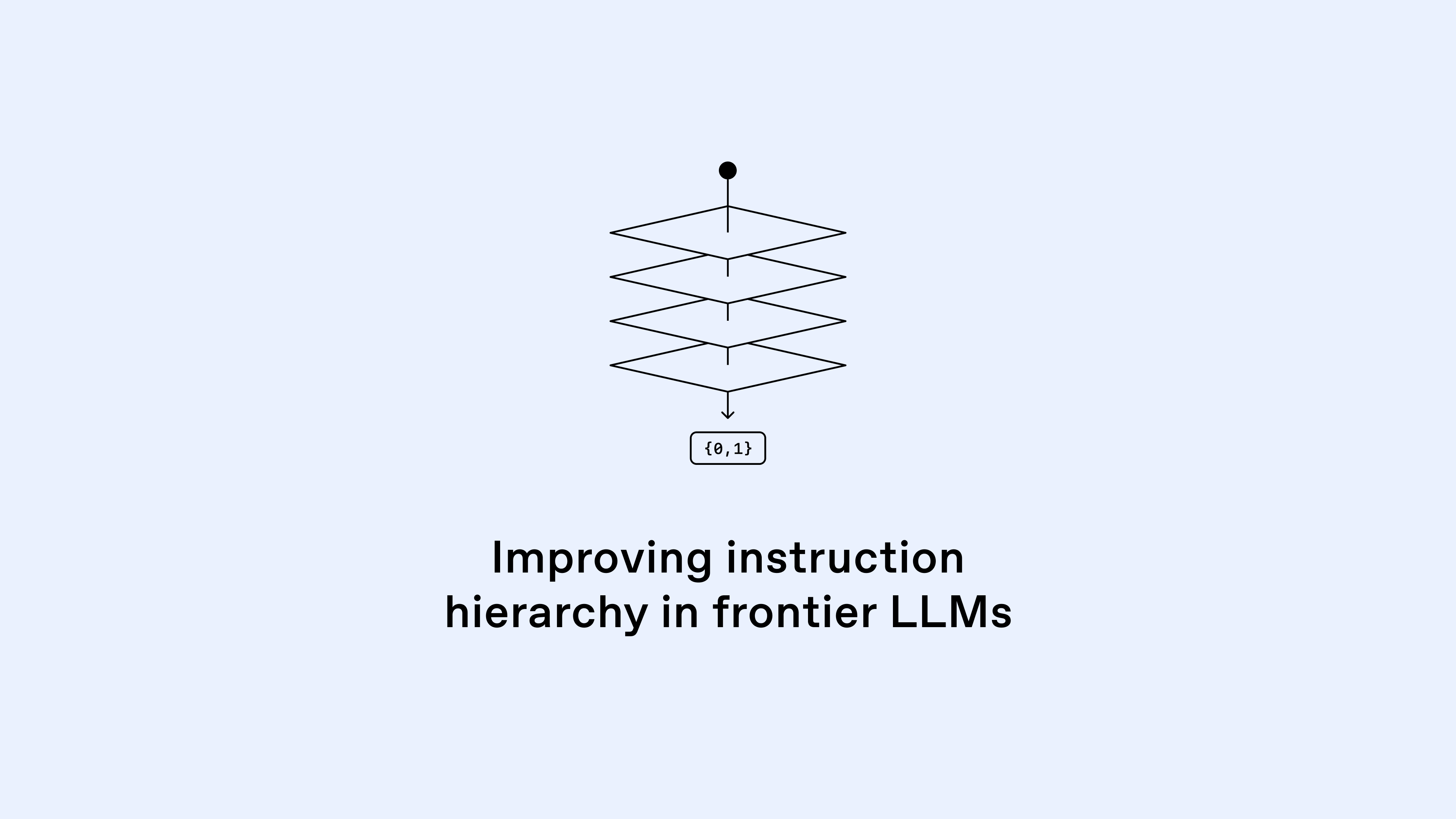
IH-Challenge trains models to prioritize trusted instructions, improving instruction hierarchy, safety steerability, and resistance to prompt injection attacks.
OpenAI introduces a new framework and evaluation suite for chain-of-thought monitorability, covering 13 evaluations across 24 environments. Our findings show that monitoring a model’s internal reasoning is far more effective than monitoring outputs alone, offering a promising path toward scalable control as AI systems grow more capable.
OpenAI researchers are testing “confessions,” a method that trains models to admit when they make mistakes or act undesirably, helping improve AI honesty, transparency, and trust in model outputs.
Apollo Research and OpenAI developed evaluations for hidden misalignment (“scheming”) and found behaviors consistent with scheming in controlled tests across frontier models. The team shared concrete examples and stress tests of an early method to reduce scheming.
OpenAI shares progress on the partnership with the US CAISI and UK AISI to strengthen AI safety and security.
OpenAI’s new research explains why language models hallucinate. The findings show how improved evaluations can enhance AI reliability, honesty, and safety.
Sharing the latest Model Spec
Deliberative alignment: reasoning enables safer language models Introducing our new alignment strategy for o1 models, which are directly taught safety specifications and how to reason over them.